
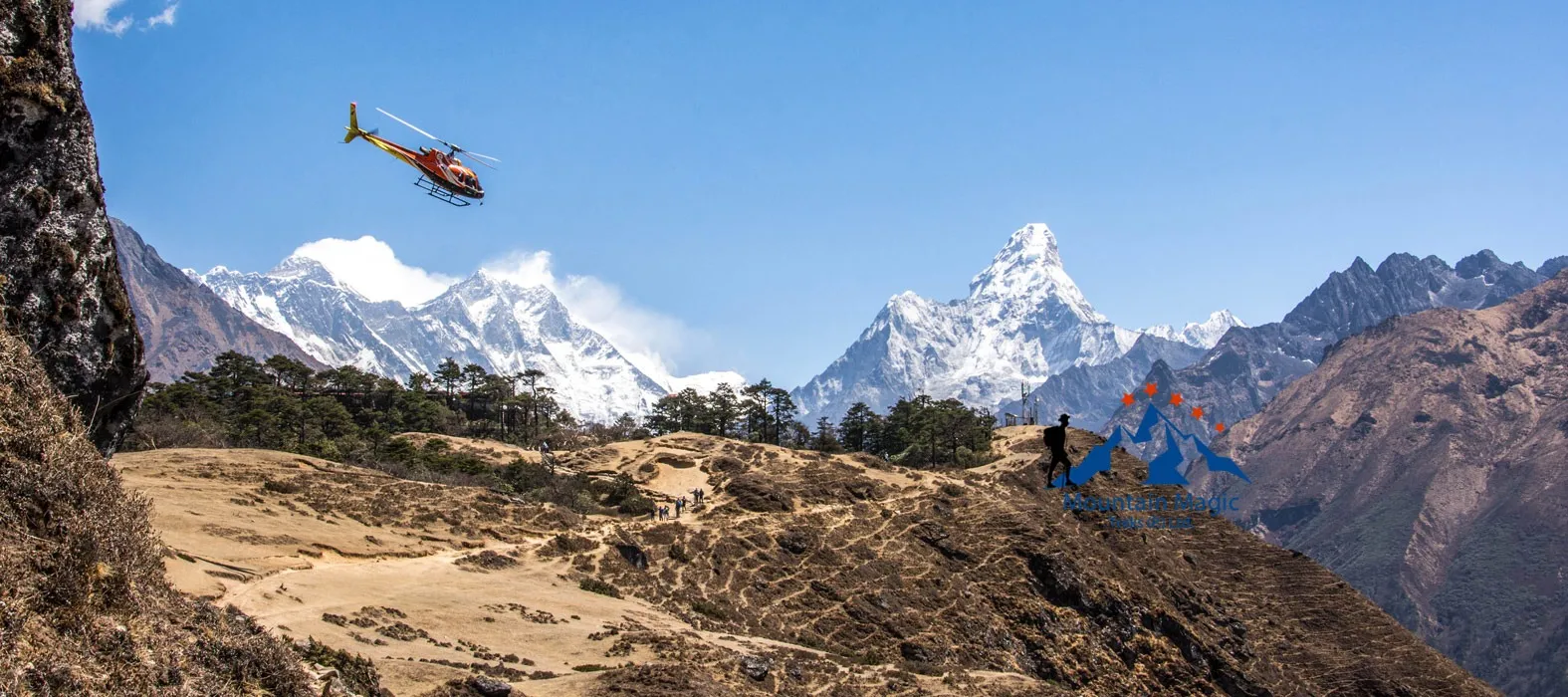
The final days of an Everest trek can feel strange. You are tired, excited, and probably thinking about reaching the main goal. At the same time, the mountains around you may make you want to slow down and enjoy every minute.
The Everest Base Camp Trek With Helicopter Return makes these final days especially interesting. You walk through the highest sections of the route, reach Everest Base Camp, climb Kala Patthar, and then leave the mountains by helicopter instead of spending several more days walking back.
This gives the ending of the trip a completely different feel.
Dingboche Is the Last Big Pause
By the time you reach Dingboche, the journey has already changed dramatically.
The green hills near Lukla are far behind you. The landscape is wider, colder, and more exposed.
Use the Rest Day Wisely
Dingboche is an important acclimatization stop.
You can take a short hike, explore the village, enjoy the mountain views, and then return to rest.
Do not use this day to test your physical limits.
The next sections will take you higher, so saving energy matters.
The Walk Toward Lobuche
After Dingboche, the trail continues toward Lobuche.
The surroundings become increasingly rocky, with fewer trees and more dramatic mountain views.
The Air Becomes Part of the Challenge
At high altitude, a normal walking pace may no longer feel normal.
You may take more breaks than you expected.
That is not a problem.
Slow movement is often the smartest way to handle the higher sections.
Keep your breathing steady and avoid unnecessary rushing.
The Thukla Memorials Deserve Attention
The trail passes the Thukla area, where memorials honor climbers who lost their lives in the Everest region.
It can be a quiet and emotional section of the route.
Stop and Reflect
Do not treat the memorials like another quick photo stop.
Read the names when possible.
Think about the people who came here with dreams similar to those of today’s travelers.
The mountains can be beautiful and dangerous at the same time.
That contrast becomes very real in this area.
Lobuche Brings You Close to the Goal
Lobuche is one of the final settlements before Gorakshep and Everest Base Camp.
At this stage, the excitement can become stronger.
You know that the destination is getting closer.
Keep Your Focus on the Present
It is easy to start thinking only about Base Camp.
But rushing mentally can make you forget the trail itself.
Look around.
The landscape here is unlike anything you saw at the start of the journey.
Take photographs, talk with your trekking team, and enjoy the small moments.
You have already come a long way.
Gorakshep Is a Different Kind of Stop
Gorakshep sits at roughly 5,125 meters.
At this elevation, you may notice that even basic movement requires more effort.
Keep Things Simple
This is not the time to carry a heavy bag unnecessarily.
Leave larger belongings where appropriate and use a small daypack for the walk toward Base Camp.
Bring water, snacks, warm clothing, sunglasses, sunscreen, and other essential items.
The lighter your load, the easier it is to focus on the trail.
The Road to Everest Base Camp
The walk from Gorakshep to Everest Base Camp is one of the most important sections of the journey.
The listed itinerary places Base Camp at around 5,364 meters.
Do Not Expect a Perfect Trail
This is a high mountain environment.
The route can be rocky and uneven, and your pace may be slower than it was earlier in the trek.
That is normal.
Take your time and watch where you step.
The goal is to arrive safely, not to finish first.
The Moment at Base Camp
When you finally reach Everest Base Camp, you may feel a mix of excitement and exhaustion.
You have spent several days walking toward this point.
Look Around Before Taking the Next Step
The Khumbu Icefall and surrounding peaks create an impressive setting.
Take a few photographs.
Then put your phone away for a moment.
Think about the journey from Lukla.
The green hills, suspension bridges, Namche, Tengboche, Dingboche, and Lobuche are all behind you.
You are now standing in a completely different landscape.
The Return to Gorakshep
After spending time at Base Camp, the trail returns toward Gorakshep.
This section may feel easier because the main goal has been reached, but fatigue can still make walking difficult.
Do Not Let Excitement Replace Caution
You still need to pay attention to the trail.
Stay hydrated.
Keep warm.
Walk carefully over loose rocks.
High altitude does not become less serious just because Base Camp is behind you.
Kala Patthar Offers Another Reward
The next morning brings the climb toward Kala Patthar.
At approximately 5,545 meters, it is the highest point listed in the itinerary.
Go Early for the Mountain Light
Many travelers make the climb around sunrise.
The cold can be intense, but the early light creates beautiful views of Everest and nearby peaks.
The mountains can change appearance within minutes.
Watch the colors shift as the sun rises.
It is one of those moments that is difficult to describe properly afterward.
Why Kala Patthar Matters
Everest Base Camp gives you a strong sense of being inside the high mountain environment.
Kala Patthar offers a wider perspective.
From the viewpoint, you can see several major peaks together.
Look Back at the Route
Try to imagine the trail you followed during the previous days.
The villages may now be hidden behind ridges.
The distances that felt enormous on foot can look surprisingly small from high above.
This is one of the best places to understand the scale of the Khumbu.
Then the Journey Changes Completely
After the trekking section, the helicopter becomes part of the adventure.
The Everest Base Camp Trek With Helicopter Return uses a helicopter to take travelers away from the high mountain area rather than requiring them to walk the entire route back.
The View From the Air Is Unforgettable
For days, your eyes have been focused on the trail ahead.
Now the landscape moves beneath you.
You can see valleys, rivers, glaciers, villages, and mountain ridges from a completely different angle.
The helicopter gives you a final look at the route you worked so hard to cross.
The Return Is Not Just About Saving Time
Saving several walking days is one benefit of a helicopter return.
But there is another reason the flight can be special.
You Get a New Perspective
A trekker sees the mountains from ground level.
A helicopter passenger sees how all those separate places connect.
The villages, trails, valleys, and peaks suddenly become part of one enormous landscape.
It is almost like watching the entire trek from a distance.
Mountain Weather Can Change Plans
Helicopter operations depend heavily on weather.
Clouds, wind, and visibility can affect the flight.
Build Flexibility Into Your Schedule
Do not make an important international flight connection immediately after the expected helicopter arrival.
Leave some extra time.
This simple decision can make your return much less stressful.
Mountain travel requires patience.
The Final Days Are About More Than the Finish
The Everest Base Camp Trek With Helicopter Return does not end the moment you reach Base Camp.
The climb to Kala Patthar, the return to the helicopter pickup area, and the flight back are all part of the story.
The final days bring together everything you experienced earlier.
You have seen the landscape change.
You have adjusted to altitude.
You have walked through mountain communities.
Now you get one last chance to look at the region from above.
A Different Way to End an Everest Adventure
The best ending to a mountain journey is not always another long walk.
For some travelers, the helicopter provides a practical and memorable way to finish.
You still experience the trail properly.
You still reach Everest Base Camp.
You still climb Kala Patthar.
But instead of retracing the entire route, you leave the mountains by air.
That combination makes the Everest Base Camp Trek With Helicopter Return a distinctive way to experience the Khumbu.
FAQs
What comes after Everest Base Camp?
The route returns to Gorakshep before the climb toward Kala Patthar.
Is Kala Patthar higher than Base Camp?
Yes. Kala Patthar is approximately 5,545 meters, while Everest Base Camp is around 5,364 meters.
How long is the Base Camp section?
The listed itinerary describes the Lobuche–Gorakshep–Everest Base Camp section as a long trekking day, generally around seven to nine hours.
Does the helicopter replace the entire trek?
No. The trekking portion to Everest Base Camp and Kala Patthar is still completed on foot.
Why is the helicopter return useful?
It removes the long return trek and provides an aerial view of the Khumbu after you have experienced it from the ground.
Can the flight be affected by weather?
Yes. High-altitude weather can change quickly and may affect helicopter operations.